

Since Connie's return from the Hippocrates Institute, we've each been having 16 ounces of green veggie juice each day. This is what Hippocrates recommends. We're liking it, and we notice a difference.
Join us to hear more.
In the week that Connie's been back, she's feeling stronger, more energy and more potential for her life. She says she knows she can contribute more to life and has the energy and clarity to do it.
The basic routine we're applying now, in testing out the Hippocrates "diet", is 80% raw veggies, with half the raw being sprouts and 15% being fruit. 20% is cooked. And we each have the 16 ounces of green veggie juice each day.
This program is an adjustment to how we have been eating, although we've been about 50% raw already. And what we've added in the way of raw, and particularly sprouts, has made a noticeable difference in our energy and clarity. It's like there's a strong, purring motor in us.
That said, let's look at what the benefit of the green juice is.
The first thing is that it makes it possible to get the nutrients from a large amount of veggies into us easily and more quickly than chewing through it all. And it's easy to put lots of variety of vegetables in the juice.
Some people digest juice more easily since it doesn't have all that fiber. But there's an important trade-off when we juice because the fiber is extremely valuable too.
The fiber is food for our gut microbes, and a well fed, healthy microbiome is essential for proper digestion and nutrient absorption, as well as the foundation of a strong immune system.
Fiber gives us a greater sense of satiety and being full when we eat. And it slows the absorption of naturally occurring sugars in our food so we don't get spikes in our blood sugar that lead to the "sugar blues" and can contribute to the onset of diabetes.
So, what we do to get the best of both worlds, the juice that's fibre-free, and the benefits of the fibre is to use the fibre in crackers or "bread". Here's the recipe we use.
There are great benefits from juicing, but in our minds the whole vegetables are the foundation of our health and the vegetable juice is like a concentrated supplement to that foundation.
If you eat plenty of whole vegetables and drink vegetable juice, you're getting the advantages of both.
With all that in mind, there are a few vegetables that actually benefit from being eaten in their whole form rather than being juiced.
One of them is the cruciferous vegetables-broccoli, cauliflower, cabbage, Brussels sprouts and kale. When you chop or chew them, you damage the plant cells and bring enzymes and compounds together that help produce compounds like sulforaphane that activate the body's antioxidant and detoxification defences.
Also, tomatoes, when they're cooked, increase the availability of lycopene, which is an antioxidant and beneficial for heart and prostate health.
Onions and garlic increase their benefits from being chopped and chewed.
And mushrooms add very little to a juice, so they're best eaten cooked and whole.
The recipe this week is the basic H.I. (Hippocrates Institute) Green Juice that we're doing. Give it a try and let us know what you think.
To your Amazing Health,
Connie and Bill
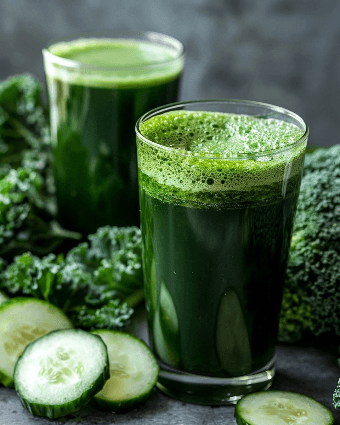
H.I. (Hippocrates Institute) Green Drink Makes 16 ounces
- 1 large English cucumbers, cut in chunks
- 2 stalks of celery (good size stalks), cut in slices
- 4 ounces sunflower sprouts
- 4 ounces pea shoot sprouts
- 3 or 4 leaves of kale without stems, or chard, or beet tops
Juice by adding the cucumber and celery first, then sprouts and greens. You may want to run your pulp through again if it is quite wet.
Hippocrates Institute recommends 16 ounces each day: 8oz. at 10am, as the first thing you have for the day, and 8oz. at 4pm, before a 5pm final meal. So, this recipe can be all you need to juice for the day with 8oz stored in the refrigerator until 4. To prevent oxidation, pour the juice into a container that leaves very little air at the top and cover with plastic wrap.